
What You Don’t Know About the Poverty Cycle

What You Don’t Know About the Poverty Cycle and Family Homelessness
Homelessness is often misunderstood. Many people picture someone living on the street, holding a sign, and visibly in crisis. But for many families, homelessness is far less visible. It may be the parent standing behind you in the grocery store line, doing everything possible to keep life normal for their children.
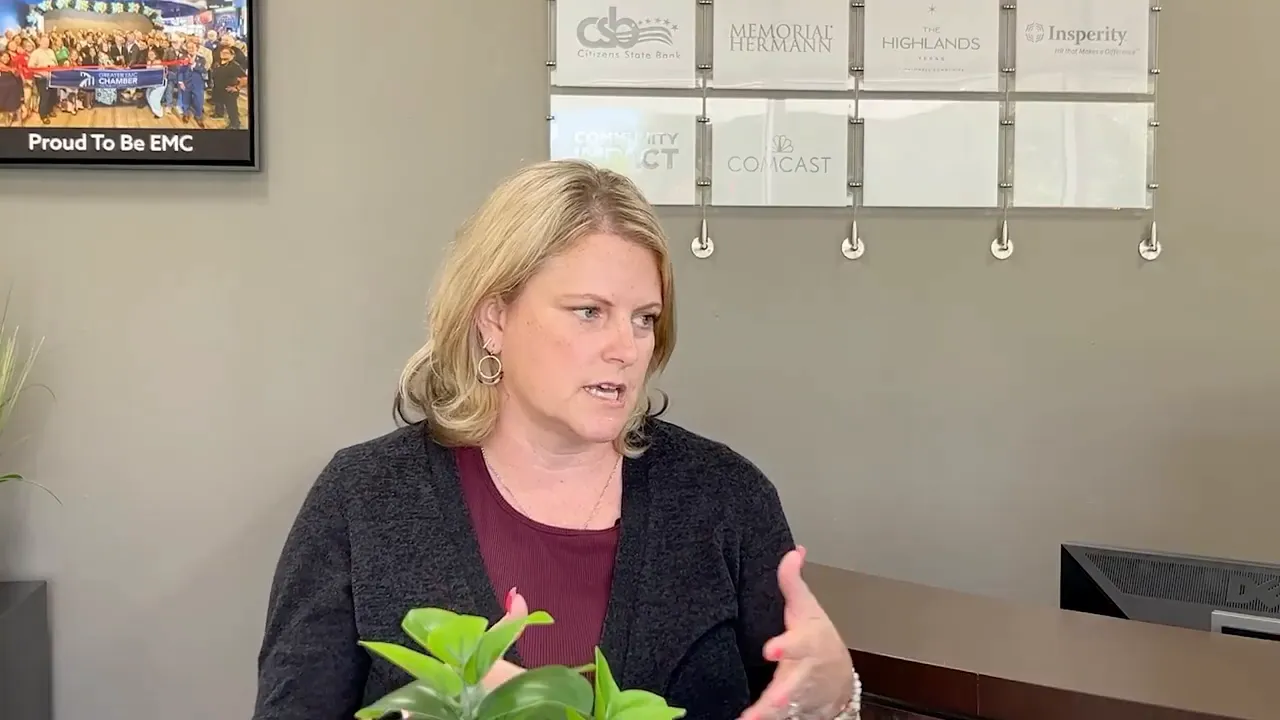
I sat down with Jessica Penney, Executive Director of Family Promise of Lake Houston, to talk about what homelessness really looks like, why families end up there, and how communities can help break the poverty cycle for good.

Family Promise of Lake Houston Does More Than Provide Shelter
Family Promise of Lake Houston serves families with children who are experiencing homelessness after a life-changing event. At its core, the organization provides shelter, but the mission goes much deeper than giving someone a temporary place to stay.
The goal is lasting stability. Jessica explained that the organization works to make sure a family does not experience homelessness again and that their children do not have to repeat that experience later in life.
That is how the cycle begins to change. A short-term housing crisis does not have to become a generational pattern.
Building Stability Through Practical Support
Temporary housing alone cannot solve the underlying challenges that put a family at risk. Families need the time, tools, structure, and support to regain their footing.
Family Promise of Lake Houston provides a range of services designed to help families move forward with confidence. Those supports include:
- Emergency shelter for families with children
- Life skills development classes
- Financial Peace University
- Foundations curriculum
- Weekly budgeting accountability
- Volunteer support for basic household needs
One of the most impactful parts of the program is its savings model. Families save 80 percent of everything they earn while in the program, with the remaining 20 percent available for spending. Because volunteers help provide many of the family’s basic needs, parents can build savings that would otherwise be impossible during a housing crisis.
That discipline creates breathing room. It gives families a chance to plan ahead, rebuild credit, prepare for housing, and move out of crisis mode.
Why Families Experience Homelessness
It is easy to assume homelessness comes from poor choices. The reality is much more complicated, and often much more human.
Jessica shared that families frequently enter homelessness because of circumstances outside their control, including:
- Loss of employment
- The death of a loved one
- A major unexpected life event
- The sudden loss of financial or family support
Sometimes a family is one paycheck, one emergency, or one loss away from instability. Everyone needs help from a friend sometimes, and that is where a strong community can make a real difference.
What Success Can Look Like
One story from Family Promise of Lake Houston especially stayed with me. A mother and daughter arrived with only one suitcase between them. They completed the shelter program successfully, and years later, their lives look entirely different.
The mother became a homeowner and now works as a membership director for a local chamber. Her daughter is thriving in elementary school, participates in karate, and has the opportunity to simply be a kid. The mother now serves on the Family Promise board of directors and uses her experience to help others facing the same difficult road.
That is not an isolated outcome. Jessica shared that 10 to 12 homeowners have come through the Family Promise program. Those stories are powerful reminders that homelessness is a circumstance, not a person’s identity or future.
Family Homelessness Is Often Invisible
One of the most important things to understand about homelessness is that it can remain invisible until you intentionally look for it.
Families experiencing homelessness may not fit the image people expect. They may be shopping for groceries, getting children to school, going to work, and trying desperately to preserve routine and dignity during an impossible season.
Families with children are the fastest-growing segment of homelessness in the United States. Statistically, one in every 30 children in an American classroom is homeless.
That number should stop us in our tracks. Homelessness is not always far away. It may be affecting families in our own neighborhoods, schools, workplaces, and communities.
How to Support Families Facing Homelessness
The simplest answer is also one of the most meaningful: volunteer.
Family Promise of Lake Houston has volunteer opportunities throughout the year and across many different needs. Volunteers are central to the mission because they help make it possible for families to save, stabilize, and rebuild.
No one gets through life entirely on their own. A meal, a practical resource, a kind conversation, financial guidance, or time given in service can become part of someone’s path back to stability.
Help Break the Cycle
When we move past assumptions and see homelessness for what it often is, a temporary crisis caused by difficult circumstances, we can respond with more compassion and more purpose.
Families do not just need a roof over their heads. They need a path toward a future where they can remain safely housed, provide for their children, and build a life beyond survival.
That is the kind of work that strengthens an entire community. We should never underestimate what a helping hand can mean to a family in need.
Are you interested in being Tracie's next guest? If so, contact our office today to learn more! 281-354-0051